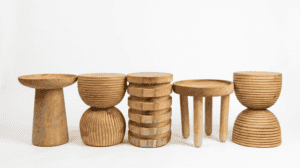
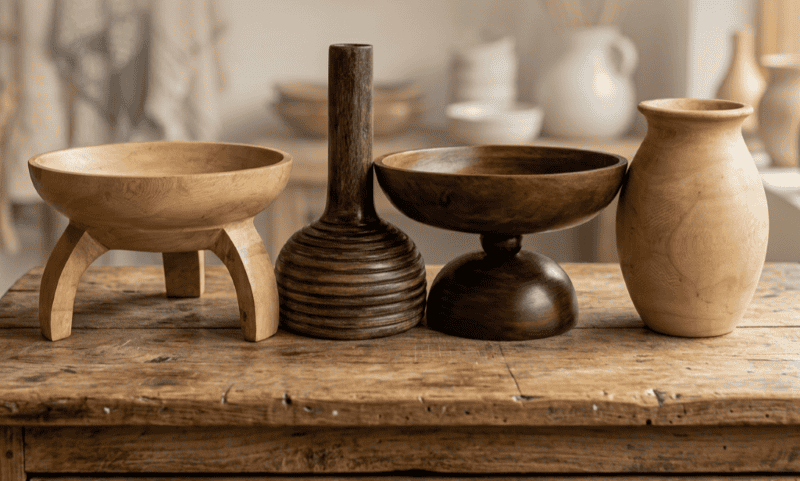
When you invest in a handcrafted piece of furniture, the first decision you make is often the most important: choosing the best wood for carving in Kenya.
The wood you select determines more than just how the piece looks the day it arrives. It also affects how it holds up over years of use, how it ages in your environment, and whether it becomes more beautiful with time or loses its character.
Carved wood furniture and décor objects are central to contemporary organic interiors, boutique hotels, safari lodges, and modern homes that understand the difference between furniture that fills a room and furniture that defines it.
Getting the wood right is the foundation for a piece that truly makes a statement.
Why climate matters
Kenya’s climate can be challenging for wood.
From humid coastal regions to cooler highlands with shifting temperatures, wood that isn’t chosen carefully may warp, crack, or lose its appeal over time.
The best wood for carving in Kenya works quietly across these conditions.
It responds predictably, maintains its form, and develops a patina that adds personality rather than detracting from it.
Understanding which hardwood suits your space and environment is the first step in making a confident investment.
The best hardwoods for carved wood furniture and décor
Jacaranda – The most considered local choice
Jacaranda is the premier local hardwood for carvings in Kenya. Its reputation is well earned.
It’s accessible across many regions and naturally adapts to local climate conditions. It responds beautifully to carving, allowing clean sculptural shapes that define a well-made log stool.
Its warm tones sit effortlessly in contemporary interiors, and once dried and finished, it holds its form reliably for years.
When you choose a Jacaranda wood carving, you get a piece that cooperates with the carver’s hands, produces a surface that feels alive, and carries the warmth of a timber worked in this region for generations.
Jacaranda is ideal for modern apartments, boutique hotels, safari lodges, and contemporary homes. It balances craftsmanship, aesthetics, and long-term value with quiet confidence.
Mahogany – A premium choice for refined interiors
Mahogany brings depth and a sense of permanence. Structurally strong and resistant to decay when treated correctly, it has a smooth grain and a rich natural colour that deepens with age.
A well-made mahogany log stool does more than last. It grows more distinguished over time, reflecting the life lived around it.
If your home or hospitality space seeks a classic, composed aesthetic, mahogany is a premium choice. It rewards careful craftsmanship and becomes a piece that holds authority in any room for decades.
Teak – The most resilient option
Teak is naturally rich in oils and highly resistant to moisture. It’s perfect for coastal homes, spaces near open windows, or interiors with significant humidity.
Teak requires minimal maintenance, resists surface wear, and remains consistent over time. If your stool or decor object will face demanding conditions, teak is your best option. It gives back more than it asks, letting you enjoy its beauty without worry.
Why hardwood matters
Hardwood is the foundation of a long-lasting investment.
Softer woods may crack, deform, or fail under daily use, but hardwoods hold weight, retain shape, and age gracefully.
Any carved furniture or décor object isn’t a seasonal purchase.
They’re long-term companions in your home. Choosing the right wood ensures that every aspect from carving to finish to placement builds on a solid foundation that lasts.
Caring for your carved wood object
A well-made hardwood carving asks for very little care.
- Keep it away from prolonged moisture or direct rain.
- Wipe the surface with a soft dry cloth when needed.
- Reapply a natural wood finish once or twice a year, or when the surface begins to feel dry.
- Place it on stable indoor flooring.
With this care, your carved wooden piece will remain intentional in your space for years. Over time, it develops a patina that makes it feel even more integrated and alive in your home.
Frequently Asked Questions
1. What is the best wood for a log stool in Kenya?
Jacaranda, mahogany, and teak are the top choices. Jacaranda for warmth and workability. Mahogany for depth and classic elegance. Teak for moisture resistance and resilience. The right choice depends on your space, environment, and how long you want the piece to last.
2. Are wood decorations durable in Kenyan homes?
Yes. Properly dried and finished hardwood carvings are among the most durable decor investments. Quality craftsmanship and material transparency are essential.
3. Where can I buy handcrafted wood décor objects in Kenya?
Look for artisan brands that specify wood species, craftsmanship, and finishing methods. At Lucidity Artisanals, we produce contemporary log stools and carved wood objects from premium hardwoods designed to thrive in modern Kenyan interiors.
The right wood, the right piece
Jacaranda is the most balanced local hardwood for carved wood objects.
Reason? It’s accessible, workable, and aesthetically warm.
Mahogany and teak are excellent alternatives depending on your interior style, environment, and desired longevity.
Whether you are furnishing your home, sourcing for a commercial project, or curating a boutique hotel or lodge, choosing the right hardwood is both a design decision and a long-term commitment.
Choose carefully, and your carved wood stool or decor object will reward you for years to come.
Explore more handmade decor from Kenya
If you enjoy decorating with natural materials, you may also like these guides:
• Decorative Craft Figures
• Wall Art Decor
• Pouffe Ottoman Kenya